Tuesday, August 11, 2026 — seven weeks left in the regular season.
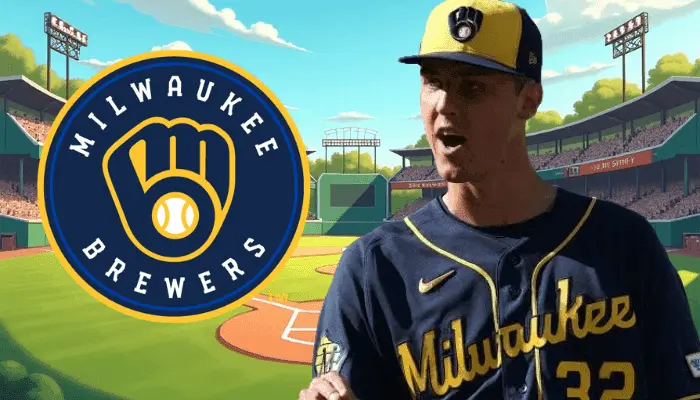
Here is a statistic that should not be possible. The Milwaukee Brewers rank 30th in Major League Baseball in home runs. Dead last, out of thirty teams.
They also have the best record in baseball, at 74-44.
How That Works
Pitching. Almost entirely pitching.
Milwaukee’s staff ERA of 3.47 ranks second in the majors, and its 1,156 strikeouts rank second as well. The offense is perfectly functional — fifth in runs scored, which tells you how they manufacture without the long ball — but the identity of this team is run prevention, top to bottom, rotation to bullpen.
The milestones have been piling up all summer. Milwaukee became the first club in baseball to reach 70 wins this season, doing it faster than any team in franchise history. They also got to 50 and 60 wins quicker than any Brewers team before them. Pat Murphy, already a two-time NL Manager of the Year, is running a team that has essentially never had a bad month.
The Miz
And then there is Jacob Misiorowski, who is having one of the great pitching seasons in franchise history at age 24.
On Sunday, in an extra-innings win over the Twins, Misiorowski struck out nine and reached 200 for the season. He is the ninth pitcher in Brewers history to hit that number. He is also, by a wide margin, the fastest — he needed 129 1/3 innings, obliterating the franchise mark of 145 2/3 set by Corbin Burnes.
Zoom out further and it gets absurd. Only one pitcher in the entire history of the sport has reached 200 strikeouts in fewer innings: Spencer Strider. That’s the list. Two names.
He is now above 204 strikeouts and climbing, and Jeff Passan and others have him as the clear frontrunner for the National League Cy Young Award.
The Fastball, and What Came After It
Misiorowski arrived as a curiosity: a 6-foot-7 right-hander who threw harder than seemed reasonable. Earlier this season he set the record for the fastest pitch ever recorded by a starting pitcher, at 105.5 mph.
Velocity alone doesn’t produce a Cy Young season, though. The development that has changed his trajectory is the breaking ball. Murphy has repeatedly pointed to it — Misiorowski now understands how his slider moves on any given day and how to use it, which turns a two-pitch power arm into a genuine ace.
That’s the difference between a pitcher hitters fear and a pitcher hitters cannot solve.
The Origin Story
Milwaukee took him with the 63rd pick in 2022 and paid $2.35 million to sign him — well over the roughly $1.1 million slot value for that selection. It was an aggressive bet on a raw arm from Blue Springs, Missouri, and it has become one of the best returns on a signing bonus in recent memory.
He debuted in June 2025, made the All-Star team as a rookie, and opened 2026 as Milwaukee’s Opening Day starter. He’s under club control through 2031 — a fact that matters enormously for a small-market team that has watched aces like Burnes and Freddy Peralta depart in recent years.
The One Real Question
Workload.
Misiorowski is in his second big league season and has already thrown well past 130 innings while striking out batters at a historic rate. The Brewers are gearing up for a deep postseason run, and there is a live conversation in Milwaukee about how carefully to manage him over the final seven weeks.
It’s the right conversation to have. A team with the best record in baseball and a first-round bye in reach doesn’t need to squeeze every start out of August. It needs its 24-year-old ace at full strength in October, when a rotation built on run prevention faces lineups that don’t need home runs to hurt you.
The Bigger Point
Milwaukee added Dustin May at the deadline and otherwise stood pat while the Dodgers bought Tarik Skubal and the Red Sox bought Adley Rutschman. The Brewers didn’t need to make a statement. They’ve been making one since April.
Last in home runs. First in wins. It’s the most Brewers season imaginable, and it might end with a parade.




Add a comment