Tuesday, August 18, 2026 — the winter board is filling in, and Cleveland has a familiar decision to make.
The Guardians have a pattern, and it is one of the most reliable in baseball: they trade their best players exactly one year before free agency, not at the deadline, not in the walk year. Francisco Lindor. Corey Kluber. The list runs long.
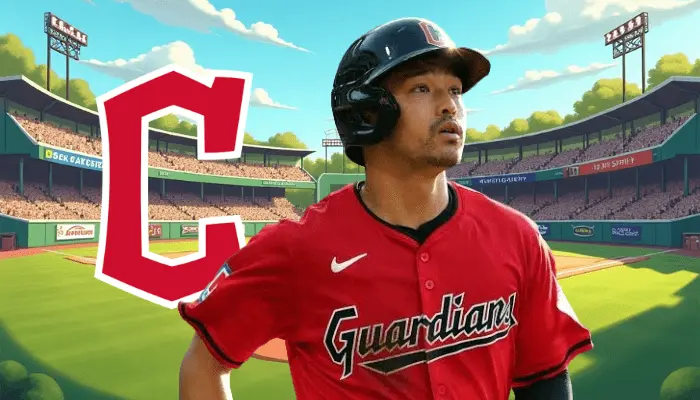
Steven Kwan hits that mark this offseason.
The Near-Miss That Started It
The industry consensus is that Cleveland came very close to trading Kwan at the 2025 deadline, with both the Dodgers and Padres involved. The talks reportedly ran out of time rather than falling apart.
The Guardians then kept him through last winter — a decision that looked poor for most of this season. Kwan struggled through the first several months, and the club would have sold at a low point had it moved him in July.
He has looked more like himself in recent weeks and is salvaging the season, which restores enough value to make a winter deal viable again.
The Financial Trigger
Arbitration will push Kwan’s salary above $10 million next year. That is his final season of club control.
For most organizations that’s a manageable number for an established outfielder with elite contact skills and Gold Glove defense. For Cleveland, historically among the thriftiest operations in the sport, it’s the number at which the internal math flips.
CBS Sports ranks Kwan fifth among early offseason trade candidates, and the logic is hard to dispute: a player Cleveland almost certainly will not extend, at a salary the club would rather not pay, with one year of control remaining and a market that values his profile.
The Complication
The Guardians bought at this deadline. They added Foster Griffin from Washington, Jo Adell from the Angels and further depth, sitting three games back in a wide-open AL Central behind the White Sox.
A club that just spent to compete doesn’t typically dismantle three months later. But Cleveland has done precisely that before, and the front office has never let a competitive window override its contract calculus.
The distinction that matters: trading Kwan wouldn’t be a teardown. It would be a value conversion, executed by a team that believes it can replace 80 percent of his production internally for a fraction of the cost.
Where He Fits
Blue Jays. Toronto sold at the deadline and has substantial payroll coming off the books. Ken Rosenthal reported the Jays may be open to buying scenarios that bring in future commitments — and they need outfield help for 2027.
Mariners. Seattle finished the season ranked near the bottom of the majors in runs scored and is actively trying to convert its pitching surplus into offense. Kwan is exactly the contact-and-defense profile that plays in T-Mobile Park.
Phillies. Philadelphia bought at the deadline, fell out of a playoff spot anyway, and has an aging outfield situation to address.
The Wild Card
Everything above assumes a functioning offseason market. The CBA expires December 1, a lockout is widely expected, and clubs cannot trade during a work stoppage.
That compresses the entire winter into November — and it favors exactly the kind of deal Cleveland would be making. Kwan on one year at roughly $10 million is a straightforward, cap-agnostic acquisition, unlike the nine-figure commitments that will sit frozen until the labor picture clears.
If the Guardians are going to run the play they’ve run a dozen times, they may have a very narrow window to run it in.







Add a comment